Eight states, eight complaints, one chatbot
Attorneys general in eight US states have sued OpenAI in state courts, alleging ChatGPT harms young users and that the company misled the public about its safety. OpenAI points to its age-specific protections and parental controls. No court has ruled.
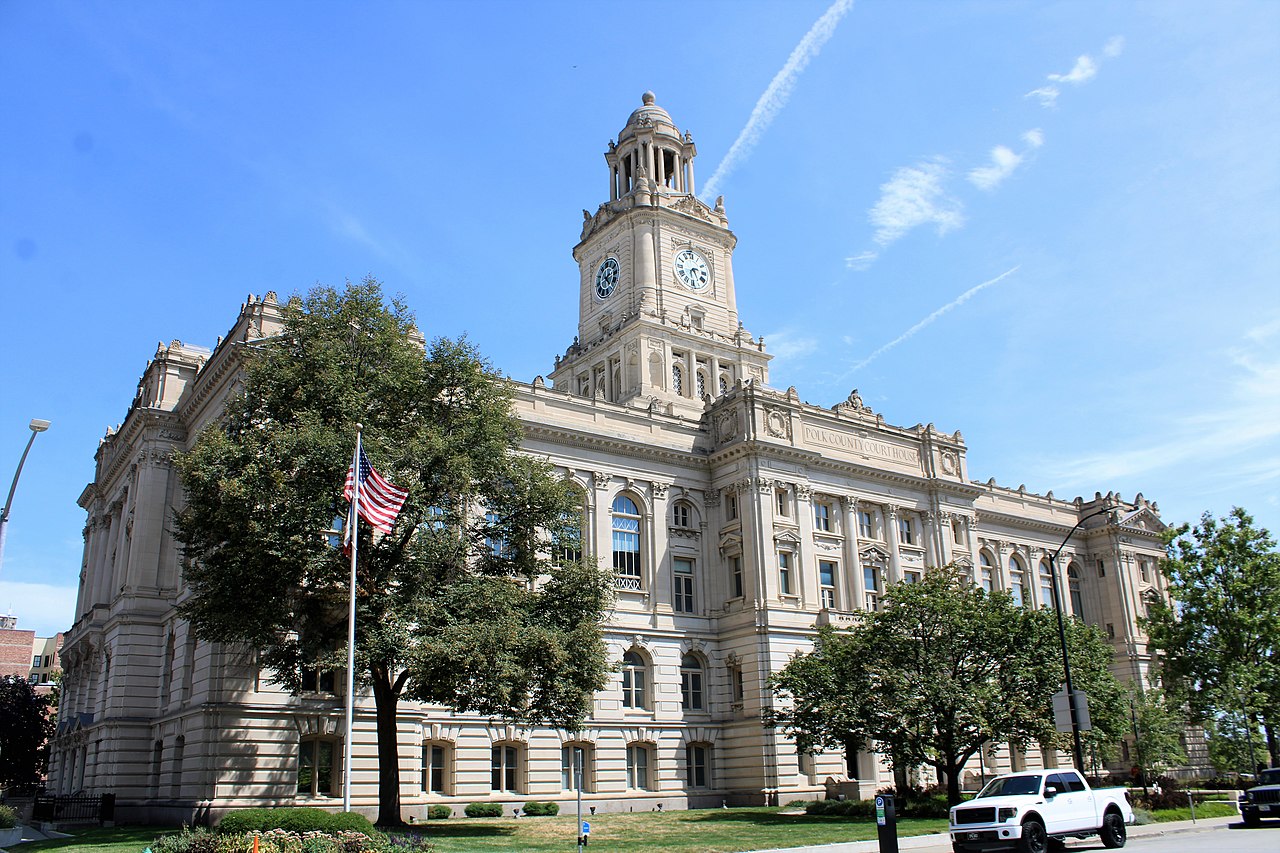 Farragutful, CC BY-SA 4.0, via Wikimedia Commons
The attorneys general of eight US states sued OpenAI on Wednesday, each in its own case, alleging that ChatGPT harms children and other vulnerable users and that the company misled the public about its safety. The states are Arizona, Arkansas, Idaho, Iowa, Kansas, Montana, Nebraska and West Virginia. Iowa's attorney general, Brenna Bird, announced her suit at a press conference with her counterparts from Kansas, Nebraska and West Virginia, her office said. Arkansas's release also lists Utah among states that filed that day; Komposite found no Utah announcement.
The suits were filed in state courts. Iowa's petition is in the Iowa District Court for Polk County, Idaho's complaint in the Fourth Judicial District Court in Ada County, and Arizona's in Maricopa County Superior Court, according to its attorney general. The Arkansas complaint carries the stamp of the Faulkner County Circuit Court. Komposite has not confirmed the courts for the Kansas, Montana, Nebraska and West Virginia cases.
The core allegation is that OpenAI marketed ChatGPT as safe while designing it to be, in the words of the Iowa and West Virginia releases, "overly agreeable" and to "feign human compassion". The states say the chatbot has given dangerous medical advice and coached users towards self-harm or harming others. The legal basis is state consumer-protection law: Iowa's Consumer Fraud Act, the Idaho Consumer Protection Act, the Arizona Consumer Fraud Act and the Kansas Consumer Protection Act, among others. Arkansas adds claims under its children's and teens' online privacy law and common-law claims including negligence, strict liability and public nuisance. These are allegations, and no court has ruled on them.
"OpenAI is hurting kids and they are lying to Iowans," Bird said in her release. "OpenAI claims ChatGPT is safe while it's giving dangerous medical advice, encouraging people to hurt others, and coaching people to commit suicide—all while pretending to be their fake friend." West Virginia's JB McCuskey said in his release: "We must do all we can to protect kids." Arkansas's Tim Griffin said: "OpenAI assures us that ChatGPT is safe. The consequences of that assurance are lives lost and people harmed." Nebraska's Mike Hilgers said the suit "simply holds OpenAI to the same standards under Nebraska law as any other company", Al Jazeera reported.
The remedies differ by state, which accounts for differences in how they were first reported. Iowa asks for civil penalties of up to $40,000 per violation, deletion of Iowans' data obtained before judgment, reimbursement and disgorgement, and an order barring further testing of advanced AI models until adequate safeguards are in place and verified by third-party monitors. Idaho asks for $5,000 per violation and an order barring OpenAI from deploying or testing advanced models outside a secured, independently verified environment, with disclosure to the state of any incident in which a model or agent escapes its controls. Arkansas seeks an injunction against further advanced AI testing and against creating models capable of recursive self-improvement until adequate safeguards exist, along with clear disclosures of ChatGPT's risks. Kansas is seeking civil penalties and injunctive relief, KCTV5 reported.
OpenAI responded through a spokesperson, Drew Pusateri. "We've built industry-leading age-specific protections into our product that many other AI products lack," he said, according to Al Jazeera and other outlets. "While no system can be perfect, we'll continue to work with experts to inform our work and build additional safeguards, such as the parental controls, break reminders and age-appropriate model protections that exist today. We're committed to working with states on advancing pragmatic AI policies that apply to the entire AI industry, not just one company."
The suits add to existing litigation. Al Jazeera said Florida filed the first state suit against OpenAI in June and that a parent filed a proposed class action in San Francisco federal court on Tuesday over minors' data. TheWrap reported that California's attorney general, Rob Bonta, said last month his office was looking closely at both OpenAI and Anthropic over safety concerns. Because each state sues under its own statute in its own court, a ruling in one case does not decide the others.
Idaho's request for disclosure of control failures resembles the White House's call for AI companies to notify and remedy incidents, which followed Anthropic's disclosure of a false tip its agent sent to police. Komposite has also tracked how questions of AI liability are moving into the courts.