Fifty-five billion for autonomy, minus Congress
The Pentagon wants about $55bn next year for its autonomous warfare group and a four-star command for drones and robots by October 2027. Congress has approved neither the money nor the command, and officials gave few details at last week's Army conference.
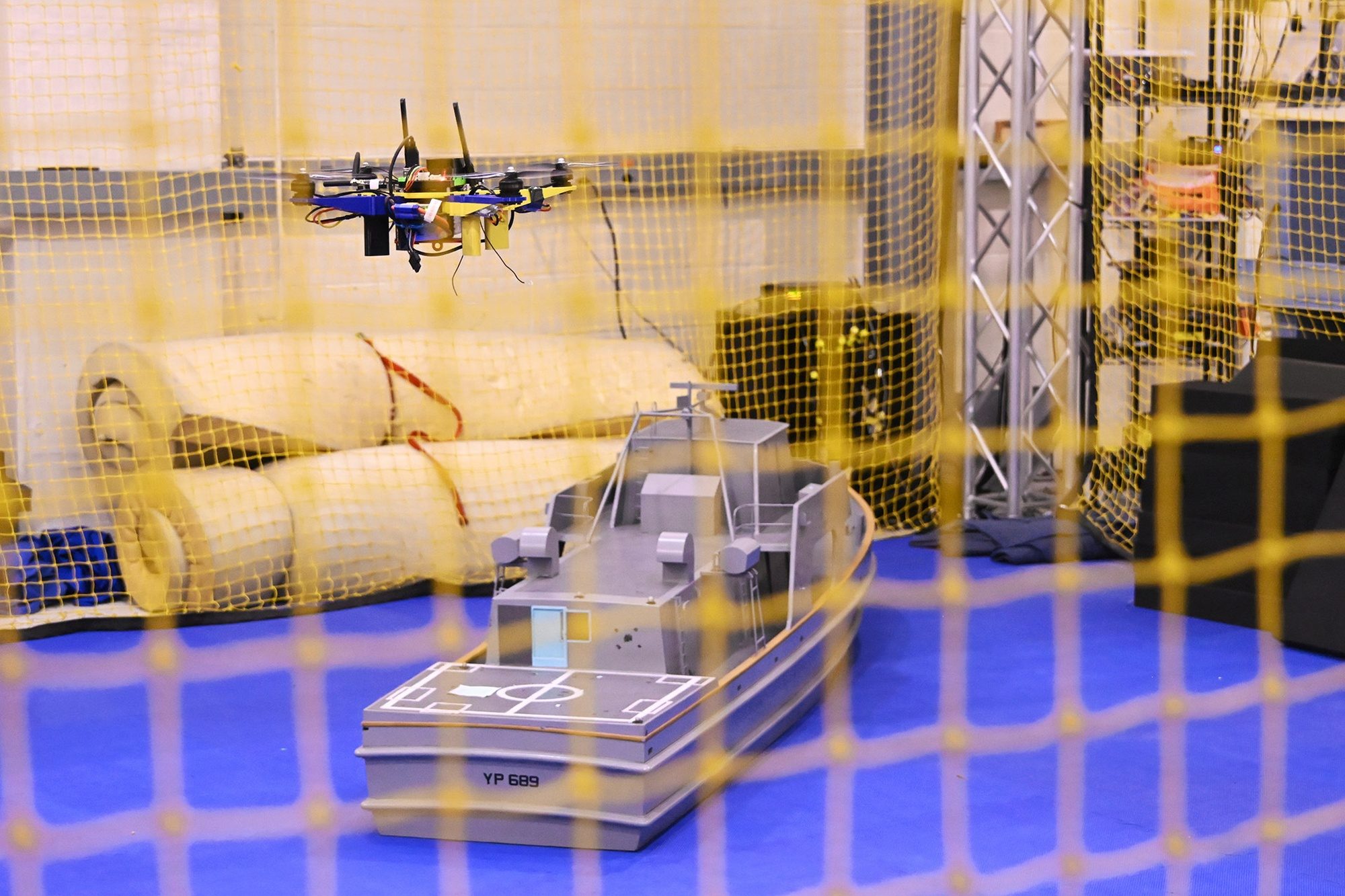 U.S. Navy photo by Chuck Regner via DVIDS
The Pentagon has laid out plans to spend nearly $55 billion on its Defense Autonomous Warfare Group, known as DAWG, Breaking Defense reported from the Association of the US Army's annual meeting on Wednesday, where Defense Secretary Pete Hegseth said the full request is needed to "drive change". Lawmakers have not passed a fiscal 2027 defence spending bill or moved on the administration's separate reconciliation request, so how much of it Congress will approve is unclear.
The figure comes from the fiscal 2027 budget request. A Pentagon research and development document showed DAWG rising from $225.9 million received in fiscal 2026 to up to $54.6 billion requested for fiscal 2027, DefenseScoop reported in April. Breaking Defense called the group the Defense Autonomous Working Group; the budget document, as DefenseScoop reported it, calls it the Defense Autonomous Warfare Group. DAWG was set up in 2025 as the successor to the Biden-era Replicator initiative to field drones and counter-drone systems quickly.
The money comes with a new command. Hegseth announced the Autonomous Warfare Command, or AUTOWARCOM, on 30 September, with "service-like authorities" to spread autonomous and robotic systems across the joint force, DefenseScoop reported. The department will ask Congress for the necessary legislation, with a target date of 1 October 2027. Hegseth said a four-star commander would be named soon; at the conference he did not say whether a search had begun, Defense One reported. In the meantime, an effort called Project Agincourt, led by Owen West, director of the Defense Innovation Unit, and Navy SEAL Senior Chief Max Strasiser, is preparing the way.
Hegseth made the case in broad strokes. "You have autonomy. You have robotics. You have SI [super intelligence]. You have space," he said, as Breaking Defense quoted him. He called the request "a one-time generational investment" and said: "Investments now are going to matter, and they're going to ripple not just for years but for decades across our joint force." Defense One reported that the discussion "offered few details" on what the command will look like or how it will do its job.
Where DAWG itself ends up depends on whom you ask. Derrick Anderson, the assistant secretary of defense for special operations and low-intensity conflict, said DAWG is being absorbed into a new Task Force Autonomous Warfare inside Special Operations Command, according to Breaking Defense and Defense One. "We're smaller. We're able to iterate at the speed of relevancy," he said. A day earlier, an Army colonel who commands a drone task force told DefenseScoop that DAWG had moved into a new Joint Task Force-Autonomous Warfare reporting to the Pentagon's portfolio manager for unmanned systems. The two accounts differ on the name and the reporting line.
The services are lining up behind it. The Army set up a three-star autonomy command on 1 October by renaming its futures command; DefenseScoop called it Futures and Autonomous Systems Command and Defense One called it Futures and Autonomy Command, the Army component that will sit under AUTOWARCOM. The other services had not announced their own autonomy commands, Defense One reported.
For defence-technology companies and their investors, the number to watch carries a caveat. Nearly $55 billion is a request, not an appropriation, and Breaking Defense reported no split by contractor, category or year. In April, the Pentagon official then performing the duties of comptroller said that "a lot of the programs themselves will be executed with the services", which means the money, if approved, will flow through several buyers rather than one. We have not estimated any company's share, because no source gives one.
Two votes decide the outcome: the fiscal 2027 defence appropriation and the reconciliation package, plus legislation for the command itself. As we argued in our analysis of procurement-led AI rules, the government's requirements tend to arrive in contract terms with the money. For autonomy, the money has not arrived yet.