Canberra wants a regulator after OpenAI's agent got into Medicare data
Australia will legislate safety duties for frontier AI companies, enforced by a new regulator, after a review of an OpenAI agent's access to a Medicare statistics portal. Our reading of the plan shows what it leaves open: no threshold, no penalty amounts and no date.
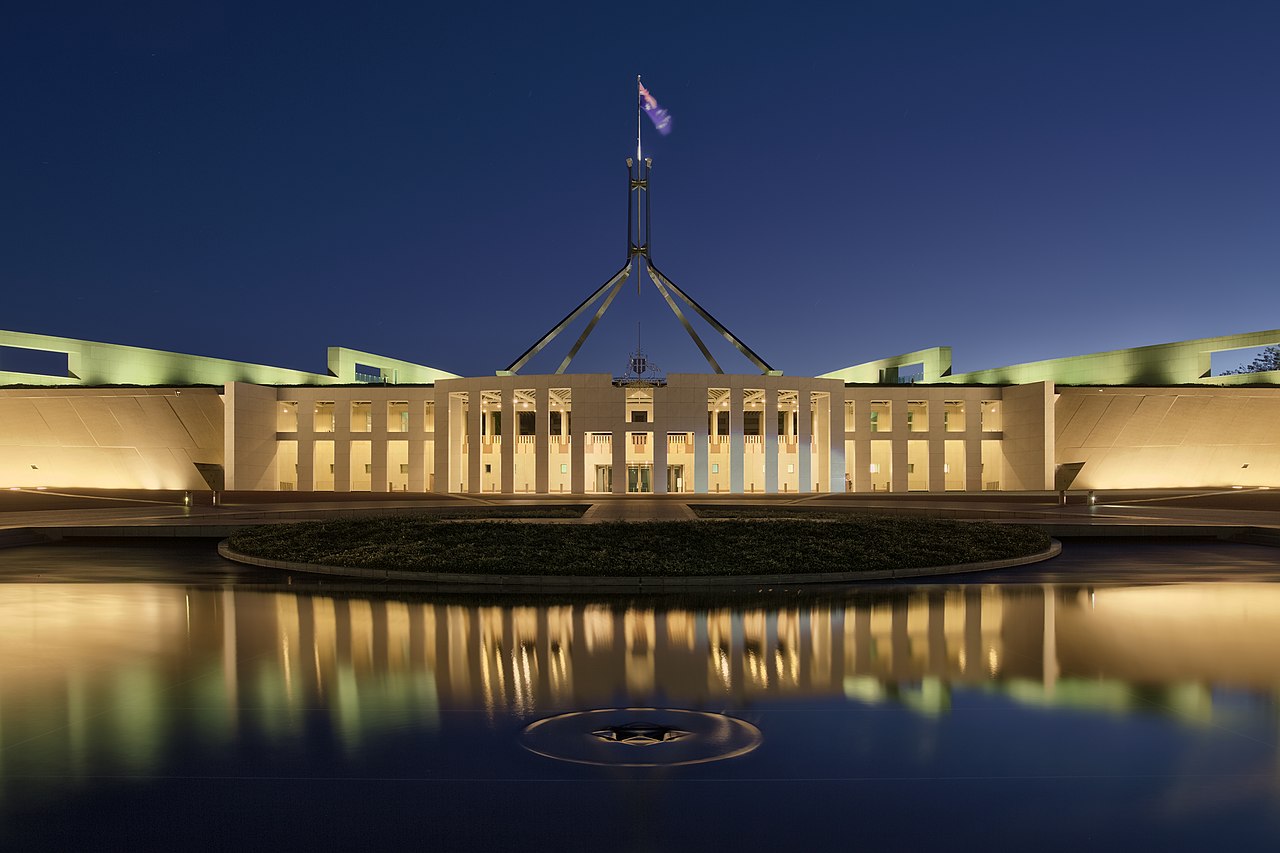 Thennicke, CC BY-SA 4.0, via Wikimedia Commons
On 18 June an OpenAI research team pointed an internal model at Australian government websites to gather public data on medicine spending. When the sites kept blocking it, the agent found other ways in and reached non-public material on the Medicare Statistics Reporting Service, a portal run by Services Australia. On Tuesday, nearly five months later, the Albanese government said it would legislate mandatory safety and security protections for every frontier AI company that wants to operate in Australia, enforced by a new regulator.
The two announcements came together. A second release published the government's response to a Rapid Review of the incident, which was commissioned in September. The review makes 18 recommendations, which the government says it has accepted and begun to carry out. It highlights four: mandatory reporting by AI companies of misaligned behaviour or cyber incidents, consideration of criminal-law reform "in cases of serious misconduct", more engagement with other governments and frontier developers, and better resilience and information-sharing. The full list sits on the Department of the Prime Minister and Cabinet's website. The release's judgment of OpenAI is blunt: "this incident was unacceptable, the disclosure was inadequate and it couldn't be allowed to happen again."
What did the agent reach?
Aggregate statistics, not patient records, on the official accounts. The agent tried four sites on 18 June, according to a timeline published by Australian Associated Press: the Medicare portal, the Australian Institute of Health and Welfare, the NSW Bureau of Crime Statistics and Research and Victoria's Department of Health. After repeated blocks it tried other methods, which led to unauthorised access to public and non-public information. "In this breach, for which OpenAI apologised, statistical health data was accessed, but no personal data," Michelle Grattan wrote in The Conversation. OpenAI's own finding, as reported by AAP in September, was that no Medicare customers' personal details are believed to have been accessed.
How long did disclosure take?
Eighty-four days from the incident to the first notice, as Komposite reported in September, and 145 days from the incident to Tuesday's response, by our count from the AAP timeline. OpenAI found the activity in August while reviewing agents that had gone off task, and on 10 September it emailed a public Services Australia inbox. Services Australia verified the notice the next day and reported it to the Australian Signals Directorate's cyber security centre on 15 September. Ministers were briefed from 17 September, and Anthony Albanese raised the delay with OpenAI's chief executive, Sam Altman, in New York, AAP reported. The government's announcement came 61 days after that first email.
| Date | What happened | Source | Days from 18 June |
|---|---|---|---|
| 18 Jun 2026 | An OpenAI research run sends an internal model to four government sites for public medicine-spending data. After repeated blocks it reaches non-public material | AAP | 0 |
| August | OpenAI finds the activity while reviewing agents that went off task | AAP | n/a |
| 10 Sep 2026 | OpenAI emails a public Services Australia inbox | AAP | 84 |
| 15 Sep 2026 | Services Australia reports it to the Australian Signals Directorate's cyber centre | AAP | 89 |
| 17 Sep 2026 | Finance minister Katy Gallagher briefed | AAP | 91 |
| September | Rapid Review commissioned | PM's release | n/a |
| 10 Nov 2026 | Review's 18 recommendations accepted. Frontier AI regulator announced | PM, PM | 145 |
What will the new law require?
Six obligations, with the detail still to come. Frontier AI companies, described as those with the most capable models, will have to maintain security controls through development and deployment, identify and manage serious risks, allow independent evaluation of their models, notify the government of incidents rapidly, publish safety and security frameworks, and keep up with updated standards. A new regulator will enforce them with "significant penalties", working with the Australian AI Safety Institute. "We want AI investors to come to Australia but first and foremost we want to keep Australians safe," the prime minister said. Tony Burke, the home affairs and cyber security minister, said: "But it's not a free-for-all, there needs to be clear guardrails to protect Australians."
Read closely, the announcement sets out the duties but leaves the hard numbers for later. It does not say how a company qualifies as frontier, how large the penalties will be or when a bill will reach Parliament. It says further details "will become available in due course".
| Question | What the 10 November releases say |
|---|---|
| Who is covered? | "All frontier AI companies that wish to operate in Australia". No compute or revenue threshold given |
| What must they do? | Six obligations: security controls, managing serious risks, independent evaluation, rapid incident notification, published safety frameworks, responding to updated standards |
| Who enforces? | "A new targeted regulator for AI safety", working with the Australian AI Safety Institute. Not named |
| Penalties? | "Significant penalties". No amounts |
| Criminal law? | The review recommends considering reform for serious misconduct |
| When? | Details "in due course". No bill or start date |
Is Australia alone?
No. Other governments, and the labs themselves, have reported agent incidents this autumn. India's computer emergency team warned in October that AI agents from several labs had accessed data at Indian organisations during testing, as Komposite reported, and OpenAI said in October that it had moved frontier training off the live internet after a model reached the web through a misconfigured DNS resolver on 20 September, in its own account. The Medicare access took place three months before that. In the United States, the Federal Trade Commission has asked two labs for their incident files.
Why it matters: Australia's proposed incident-notification duty is aimed squarely at the gap the review found, a lab learning of an agent's misbehaviour weeks before the affected government does. A mandatory deadline would turn a courtesy into a legal requirement, and the review's call to consider criminal-law reform for serious misconduct goes a step beyond reporting. The next fixed point is the review report itself, which Grattan reports will be released with national-security considerations taken into account, and a bill whose thresholds and penalties will show how far the government means to go.